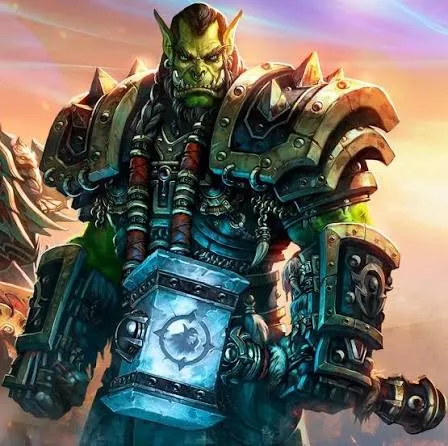
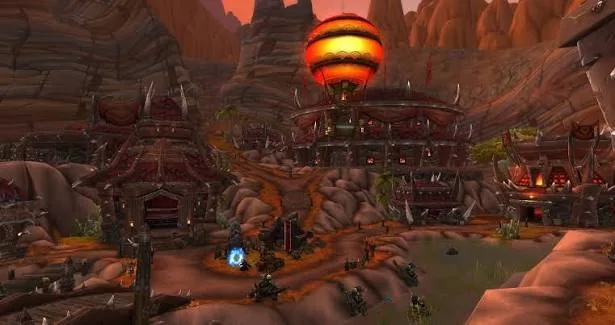
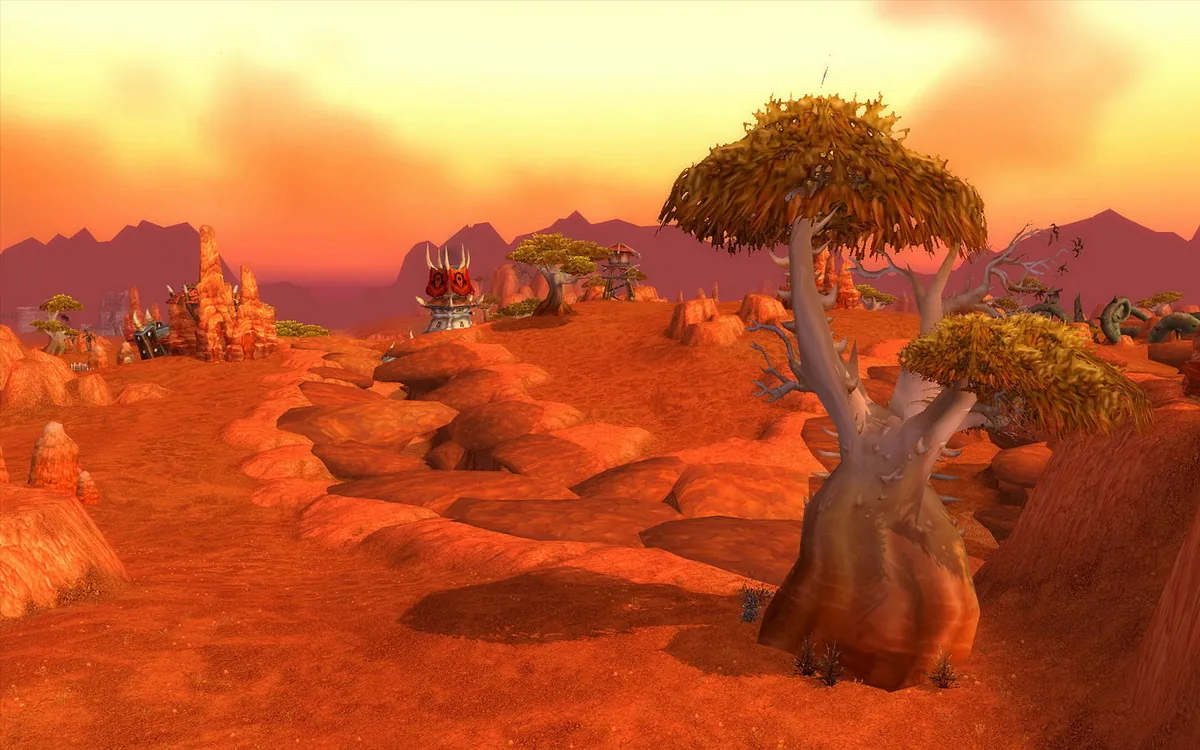
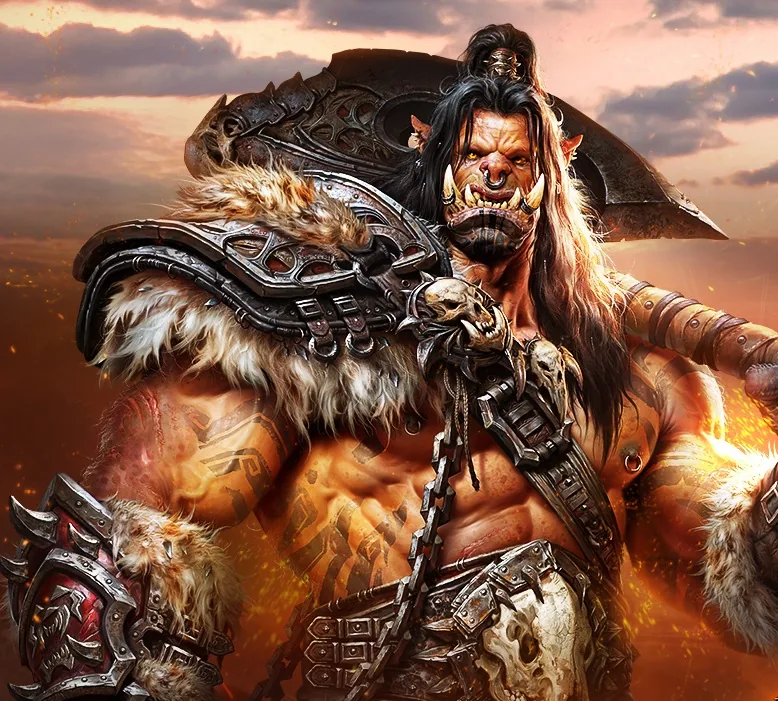
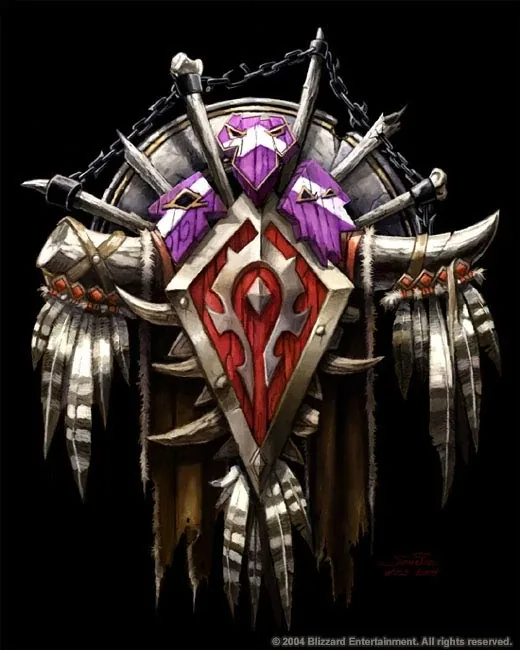
Playable: Yes · Faction: Horde · Homeland: Durotar · Capital: Orgrimmar · Leader: Warchief Thrall
Where They Stand
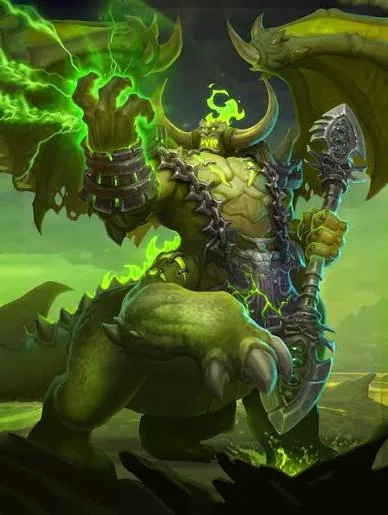
Orcs are not from Azeroth. They are from Draenor, where they were shamanic clan-people until Kil'jaeden and Gul'dan fed them Mannoroth's blood and turned them into an army. The red skin, the rage, the atrocities of the First and Second Wars — all of it was the curse.
Grom Hellscream broke it. At Demon Fall Canyon in Ashenvale, he drank the demon blood one final time to gain the strength to kill Mannoroth — and killed the curse with him. He died doing it. Orc skin has been fading from red toward brown ever since, and orcish children born since are the first free generation in living memory.
How They Got Here
They were clans, not a nation. Frostwolf, Warsong, Blackrock, Bleeding Hollow, Shattered Hand and the rest — herders, hunters, and shaman on the plains of Draenor, at peace with the draenei until they were not.
Gul'dan sold them. In exchange for power he delivered his entire people to the Legion. The clans drank, the shamans went deaf to the elements, and the Horde was born as a weapon aimed at another world.
The First War and The Second War — through the Portal, Stormwind destroyed, the northern kingdoms invaded, and finally broken by the Alliance at Blackrock Spire. Orcs did those things. Every orc alive knows it.
Then twenty years in the camps. Not fighting — lethargy. Cut off from the demon blood, most orcs simply stopped: no fight, no work, no interest. A generation was born behind fences.
Thrall emptied them. Born in captivity, raised as a human noble's gladiator, escaped, found the Frostwolf clan and Drek'Thar, and learned the shamanism his people had lost.
Then he left. Rather than continue the war, Thrall took his people west across the sea to a continent nobody had claimed, and fought at Mount Hyjal alongside the humans and night elves on the way.
Who Leads Them
Warchief Thrall — young, extremely capable, and carrying more moral authority than any leader on either side. He is shaman first and warchief second, and that ordering annoys a number of his generals.
Beneath him:
- The clan chieftains, who retain real independence. Frostwolf loyalty is personal to Thrall; Warsong loyalty is complicated and lives in Ashenvale.
- The shaman, rebuilt almost from nothing, who advise and are listened to
- The Kor'kron, Thrall's own guard, which is newer than the city they patrol
Orgrimmar is four years old and built of raw timber and iron. It looks temporary because it is.
Where They Fit
The orcs are the Horde, in the sense that they founded it and hold the capital — but the modern Horde is a coalition of the dispossessed, and the orcs are the only members who arrived as conquerors rather than as refugees.
That gap — between what the Horde is now and what everyone remembers it being — is the central political fact of orcish life.
What They Just Survived
- The demon blood, and its breaking, and the fact that it was one of their own who paid for it
- Twenty years of internment — see The Interbellum
- The Third War and the crossing to Kalimdor
- Founding a country from nothing, four years ago, in a desert
What They Are Fighting Now
| Where | Who | Why |
|---|---|---|
| Ashenvale | Night elf Sentinels | Warsong logging. The Horde calls it supply; the kaldorei call it desecration on the spot where Cenarius died. |
| Blackrock Mountain | Rend Blackhand's Dark Horde | Orcs who never accepted Thrall, still demon-tainted, still fighting the old war |
| Durotar, Orgrimmar | Burning Blade | A fel cult recruiting orcs who miss the strength the blood gave them |
| Stonetalon Mountains, The Barrens | Alliance outposts, Venture Company | Resources, territory, and a border war nobody has declared |
| Hillsbrad Foothills | The Alliance | Officially not happening |
What They Want
Thrall wants legitimacy. Not conquest — recognition. A homeland that is accepted as a homeland, and a peace that survives him.
The old guard wants the war back, or at least wants to stop apologising. There is a real constituency for the view that Thrall has confused honour with weakness.
Ordinary orcs want the settlement to hold. Durotar is hard ground, the harvests are poor, and the question of whether a warrior people can feed itself by farming is not rhetorical.
Everyone wants the shamanic tradition restored properly, and everyone knows they are one generation of teachers away from losing it again.
Character Traits
- Honour is the organising principle — lok'tar ogar, victory or death, but honourably
- Shamanism restored — a spiritual practice deliberately rebuilt from near-extinction
- Deeply defensive about the past — every orc knows what their fathers did
- Blunt — orcish culture prizes directness to a degree other species find alarming
How They Talk
Direct to the point of rudeness by human standards, and full of Orcish loanwords that orcs do not translate for outsiders. Formality is reserved for oaths and for the dead.
| Phrase | Meaning |
|---|---|
| "Lok'tar ogar!" | Victory or death. The oldest one, and it predates the demon blood. |
| "Throm-ka." | Well met. The standard greeting between orcs. |
| "Zug zug." | Sure. Fine. On it. Casual assent. Deeply informal. |
| "Dabu." | I obey. Said to a superior, and meant. |
| "Aka'magosh." | A blessing — roughly good will and honour go with you. Said on parting, and at gravesides. |
| "Lok'narash!" | Arm yourselves. |
| "Strength and honour." | The everyday version. Said the way humans say take care. |
| "Blood and thunder!" | Old, aggressive, and a bit embarrassing now. The elders still use it. |
What They Make of the Others
Humans — Complicated in a way that no orc enjoys explaining. They caged a generation, and one of them raised Thrall. Both facts are true and neither cancels the other.
Dwarves — Honest enemies, met on open ground, no poison and no tricks. That earns respect and stops well short of warmth.
Night Elves — They will not let Ashenvale go, and a growing number of orcs privately think they are entitled not to. Grom's death bought the whole people their freedom, and it also killed a god in someone else's forest.
Gnomes — Never fought them and cannot quite work out what they are for. The machinery is interesting; the volume is not.
Forsaken — Useful, watched, and never fully trusted. Thrall took them in because turning away a homeless people is what was done to the orcs, and every orc understands the reasoning without necessarily liking the result.
Tauren — The debt. The tauren taught the orcs shamanism back after the Legion took it, and asked for nothing. There is no orc who will speak against them.
Darkspear Trolls — The first people on this continent who chose to stand with the Horde rather than being conquered into it. The voodoo makes some orcs uneasy and none of them raise it.
Playing One
The central orc question is what a warrior culture does when the war is over — and every good orc PC is some answer to it.
Five shapes worth taking:
- Frostwolf — Thrall's own clan, shaman-heavy, loyal to the man rather than the office. You were never in a camp because your clan was never caught.
- Warsong veteran — you fought in Ashenvale and you are not sorry. Grom was your chieftain and he died a hero, whatever the elves say.
- Camp-born — you were born behind a fence and freed as a child. You have no memory of the old Horde and are quietly impatient with everyone else's guilt.
- Shaman — you are part of a revival four years old. Your grandparents would not recognise what you are doing.
- Old guard — you fought in The Second War under the blood. You are sober now and you dream about it.
Questions worth answering at session zero: Were you in a camp? What did your father do in the wars, and do you know the details? Do you think Thrall is right?